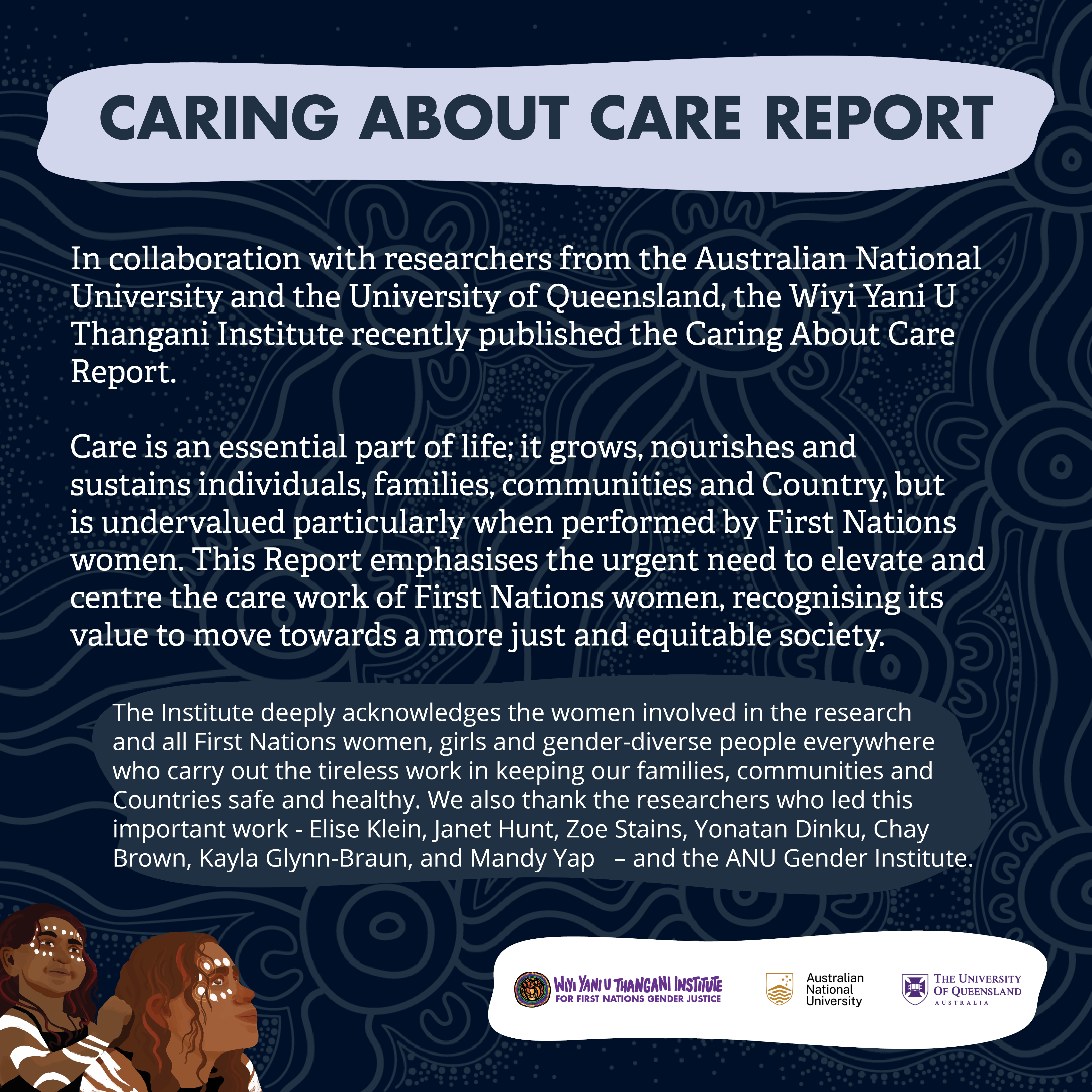
One of the first steps in being able to show up for First Nations gender justice and understand the context which First Nations women, girls and gender-diverse peoples are doing the necessary care and cultural work to keep their kin and Country safe and healthy, is learning about what this looks like. Learning might look like the history of First Nations women’s rights; exploration on what First Nations gender justice and peacebuilding means; and learning about what women are doing today.
Learning provides the grounding to be able to advocate for First Nations rights, share knowledge and practices that support our communities better, and change the hearts and minds of those who are not as well informed.
We acknowledge that peacebuilding and systems change work comes with jargon that may be inaccessible to some people. This is why it is deeply important to share knowledge in ways that make sense to different audiences, and how community can support yarns and resource sharing that enables everyone to take part in this movement. We aim for our resources to be inclusive, and we encourage you to share them with others and take time to explain concept, ideas and histories to people in your network.
We encourage you to make learning a routine. Try mapping out the time and space you have to educate yourself and others. This might be an hour a week to read a chapter from one of our reports or listening to our soundscape when cooking dinner. It might also be a monthly work meeting with your colleagues to share what you’ve learnt or host an activity.