
Dear Friends,
We hope this finds you well as the new year settles in around you. Last year was one of deep connection, learning and building—and we carry all of it with us into what's ahead. This newsletter shares the first of our (re)Storying Series, the power of horses leading healing, and an invitation to shape what we take with us to Women Deliver 2026.
In July 2025, fifty First Nations and non-First Nations women and girls gathered on Bunuba Country for four days of deep listening, transformation and co-creation.
This wasn't a standard event with predetermined outcomes. Our Measurement, Evaluation and Learning (MEL) framework guided our approach to witness and sense what emerged in real time—through yarning, creative documentation, daily sensing and the signals women and girls named as change was happening. Big hART's Punkaliyarra process captured this through video, photography and visual scribing, documenting transformation as it unfolded.
This report tells the story of those four days on Country—why we gathered, the journey together, the voices of women and girls, what emerged, and the path forward.
Cover of the Peacebuilding Co-Design Camp (re)Storying Series report, published by the Wiyi Yani U Thangani Institute for First Nations Gender Justice in July 2025. The cover features a purple-toned background with a tree silhouette and the report title in bold white text. Text at the bottom reads "Bunuba Country."
It grows from the Institute's commitment to (re)connecting with and embodying the ancestral knowledge systems and cultural practices that First Nations communities have held since time immemorial. The report captures the organic nature of the yarns, stories and transformational thinking that emerged, using yarning as an authentic research practice.
We offer this as a journal of our collective transformation. It is a love letter to and from Country, teaching us how to be still, to gather and channel our collective energy toward the change we all want to see. The camp is evidence of what becomes possible when we trust gender sensitive Indigenous methodologies to guide systems change.
In December, we opened expressions of interest for sponsored positions to attend Women Deliver 2026 in Narrm — and the response was extraordinary. Over 500 First Nations women, girls, Sistergirls and gender-diverse peoples shared their stories, showcasing the incredible diversity of knowledges, expertise and lived experiences within our communities.
The process was highly competitive, and it is with heavy hearts that we cannot support everyone to attend, because every application was unique and brilliant. The level of interest speaks to both the demand for opportunities like this and the need for more accessible pathways. This is one opportunity of many to come. We are committed to creating more spaces like this.
For those still hoping to attend, Women Deliver tickets are available through their website. The Institute can provide a letter of support to help. Contact wyut@anu.edu.au.
What are your priorities for First Nations gender justice in your life and community? What are the big issues impacting you, and the things you want to see change that Australia and the world need to know about?
Women Deliver is the largest gender equality conference in the world, with thousands of people coming from everywhere and all backgrounds, including influential decision-makers and movers and shakers.
This is an opportunity to make sure First Nations women, girls (inclusive of trans women and Sistergirls) and gender-diverse mob of this continent and surrounding islands are heard for what matters to you all. Wiyi Yani U Thangani, meaning women's voices in the Bunuba language, has always been grounded in your voices. Your responses strengthen our work to surface what matters most.
We want to carve out a space for our voices to be raised as a collective. So, tell us, what do you want the world to hear and see. And we will work with you to advocate, explore policy shifts, approaches to sustain your movements, and ultimately transform systems from the ground up.
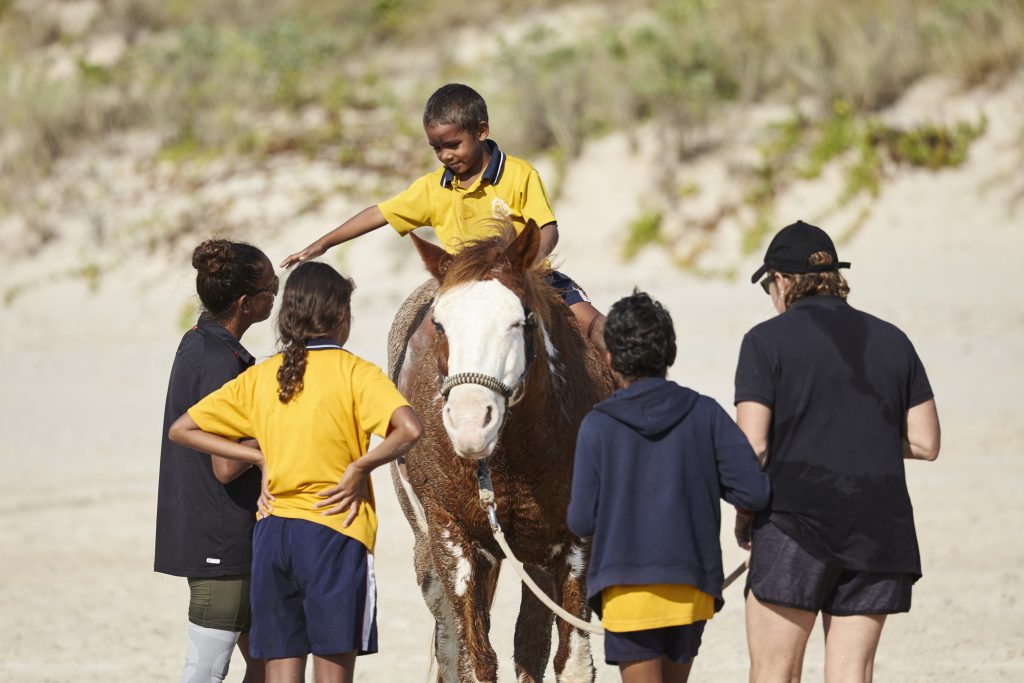
Photograph: Yawardani Jan-ga, https://yawardanijanga.com.au/
Yawardani Jan-ga—horses helping in Yawuru language—is where horses lead the healing journey in the Kimberley.
Delivered by Yawarda Services, this innovative program uses Equine Assisted Learning to support the social and emotional wellbeing of Aboriginal children, young people and families. Led by Professor Juli Coffin and grounded in extensive community consultation with Traditional Owner groups and stakeholders throughout the Kimberley, Yawardani Jan-ga centres Aboriginal leadership in youth mental health.
The program takes a holistic cultural approach, building connection to self, community and Country through hands-on learning with horses, offering young people pathways for healing and strength.
This transformational work is captured in Liyan: Guided by Horses, a new feature-length documentary that follows young people as they forge powerful bonds with horses. A 6-minute preview is available now, with the full documentary releasing in May 2025.
.svg)