
Dear Friends of Wiyi Yani U Thangani,We have returned from our second Peacebuilding Camp on Bunuba Country, where more than 60 of us gathered at Muraga Village to keep designing a peacebuilding methodology grounded in our knowledges.
Inside this newsletter you'll find reflections from the Camp and from Garma 2026, a story of Yolŋu women leading safety in Gapuwiyak, resources our team is carrying in our dilly bag, and opportunities to elevate First Nations women's voices across the continent.
Video: Wiyi Yani U Thangani Call to Action | Women Deliver 2026.
Earlier this year, Women Deliver came to our region for the first time, held in Narrm (Melbourne) under the theme Change Calls Us Here. Through an expression of Interest process, we supported a delegation of 150 First Nations women, girls (inclusive of Sistergirls and trans women) and gender-diverse people to be there – from every state and territory across the continent and surrounding islands, from remote communities to major cities, and from children to Elders. Over 500 First Nations women, girls, Sistergirls and gender-diverse peoples expressed interest, and we wish we could have brought everyone.
From the delegation came the Wiyi Yani U Thangani Call to Action – a demand that governments and decision-makers shift power, invest in our movements, and recognise that First Nations women hold the knowledge to build the world we want to live within.
Our creative partners Create Justice captured it on film. Watch the voices of our delegation, then read and endorse the Call to Action.
Thank you to our partners who made this possible by funding the delegation to attend Women Deliver 2026.
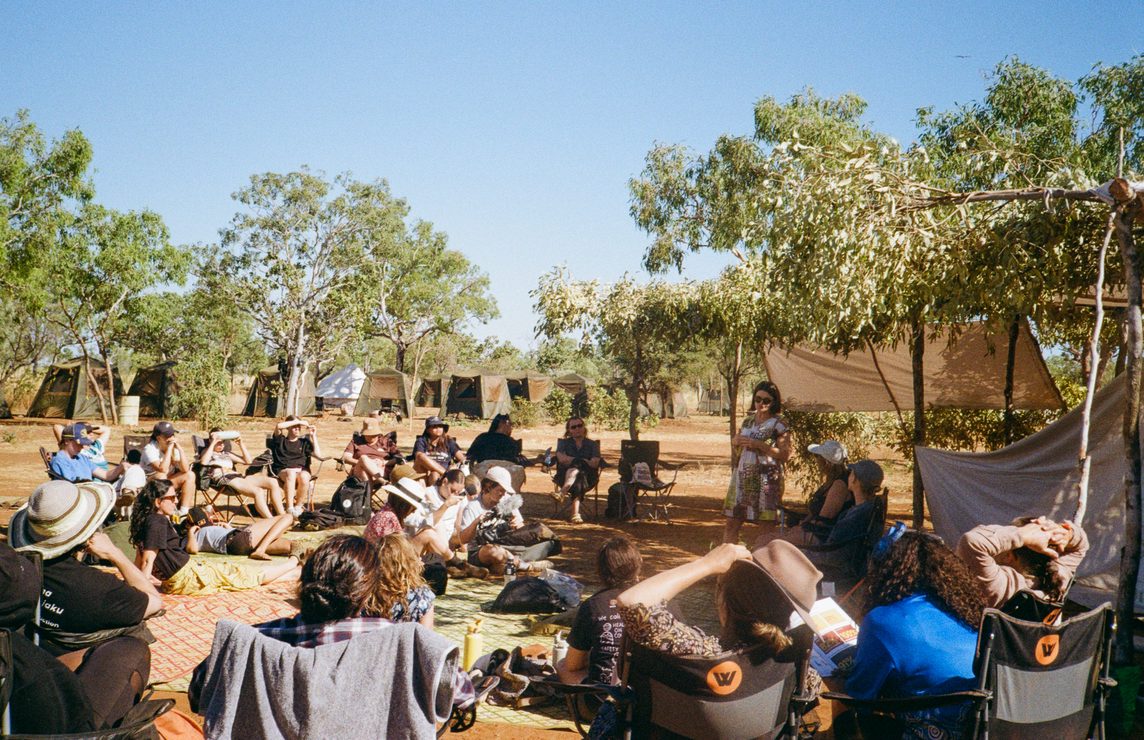
This July, more than 60 First Nations women, girls and Sistergirls from across Australia, including the Torres Strait, gathered on Bunuba Country in the Kimberley for six days at Muraga Village. Together we continued to design a new approach to peacebuilding – one grounded in our knowledge, leadership and cultural governance.
Led by our Founder and Chair, Bunuba woman June Oscar AO, we journeyed across culturally significant sites – Mowanjum, Jawi, Carpenter's Gap, Bandilngan (Windjana Gorge) and Wamali – where Country itself became teacher and guide. Through storytelling, deep listening and creative practice, we explored what peacebuilding means in practice, and how it can transform families, organisations and systems.
"For generations, First Nations women have been the peacebuilders in our families, communities and Nations," June said. This camp is about making that work visible, strengthening it, and designing the systems that let it flourish.
This is our co-design cohort, as we create the methodology and Camp program to hopefully open it up to support women, girls and gender-diverse people, and their movements from across the continent, to join us in future. The methodology taking shape at Muraga Village will also inform our research, policy and advocacy work in the months ahead. This is only the beginning – there is much more to come, so keep an eye out.
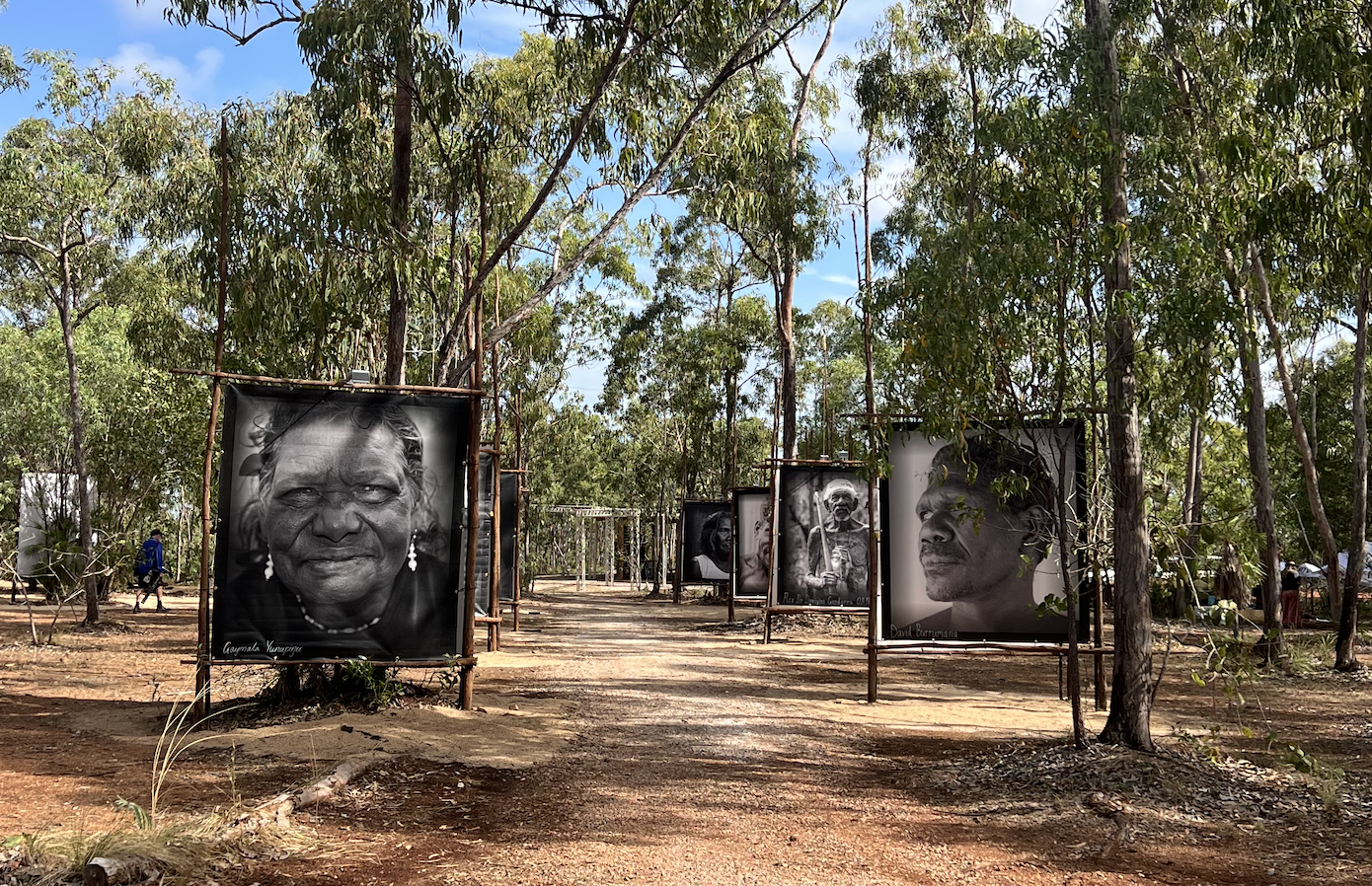
At Garma 2026, this year's theme was Bukmak – everyone. In a time of climate change, inequality and conflict, it raised something we're learning through this work: we cannot rise to the moment in isolation. Only together, led by the knowledges of Country, can we hope to respond and thrive.
The generosity of the Yolŋu in sharing their culture and Country was a lesson in leading from a place of deep knowing. As our women have long taught us, Country, song, dance and ceremony are the teachers – the forces that help us open to our senses, surrounds and spirits. Gathering by rivers, under trees and in the shadow of caves, we were reminded that leading from culture and Country first disarms us in the most beautiful of ways. It sheds our defences and brings hearts and minds together, so we can speak honestly about what we care about and what we want the world to become.
These are the elements of the peacebuilding methodology our women are creating.
With thanks to the Minderoo Foundation team, whose support made our being there possible.
In Gapuwiyak, women have long understood that safety is more than somewhere to go in a crisis. It is family, culture, connection to Country, and having trusted people close by when life becomes hard.
Miyalku Mulka Wanga – Gapuwiyak Women's Space grew from that understanding. Delivered by Galiwin'ku Women's Space (GWS), a Yolŋu-led organisation, the pilot ran from 2022 to 2024 and was built on a simple truth: women should not have to leave their community to find support. Its work draws on Gurrutu, the kinship system, recognising that relationships, family and culture are fundamental to healing.
Over two years, fifteen Yolŋu women came together to form an advisory committee representing twelve clans, guiding the direction of the work and naming what their community needed. Two local support workers were mentored into the response, and families were walked alongside through education, support plans and referrals to the services they needed.
As the Gapuwiyak Advisory Committee put it: "Yolŋu women are leading the change to make families safe. We just need the support to keep it going."
Though the funded pilot has ended, GWS has chosen to keep a presence in Gapuwiyak. The vision is a sustainable, culturally safe service led alongside Yolŋu women and shaped around the needs of local families.
Systems change requires us to have different tools we can reach for. We think of this as filling a dilly bag - some tools we co-create with women and others come from elsewhere. Here, we share podcasts, books and resources that have resonated with the team.
This one sits close to our own work as it follows the West Daly Peace Project in the Northern Territory, where Elders and local researchers draw a clear line between quieting a dispute and growing a lasting peace. The distinction they name – negative peace held in place through arrests and incarceration, and positive peace grown by tending healthy kin networks on Country – is the work of peacebuilding. When the conditions are cared for, Elders are respected and disputes tend to settle themselves.
One of its authors, Annunciata Nunuk Wilson, has walked alongside us at one of our Peacebuilding Camps.
.svg)