
Dear Friends,
On 24 March 2026, we gathered at Parliament House, on Ngunnawal and Ngambri Country, to launch the Wiyi Yani U Thangani Institute Strategic Plan 2026 — 2030.
This Plan speaks to something larger than just a document for the Institute. Iit is a continuation of a movement grounded in the voices, experiences and leadership of thousands of First Nations women, girls and gender-diverse people.
The Wiyi Yani U Thangani Institute was established in 2024 as a living expression of the landmark Women’s Voices work founded and led by June Oscar AO in her role as Aboriginal and Torres Strait Islander Social Justice Commissioner. It carries forward years of deep listening across the continent that has shaped a clear and collective vision for change. As described in the Strategic Plan, the Institute is not bound by place, but exists as a “living, felt space… carried in our voices, our stories and our connections.”
The launch of this Strategic Plan represents the next step in that journey moving from listening into coordinated, sustained systems change.
Read the Strategic Plan 2026 - 2030
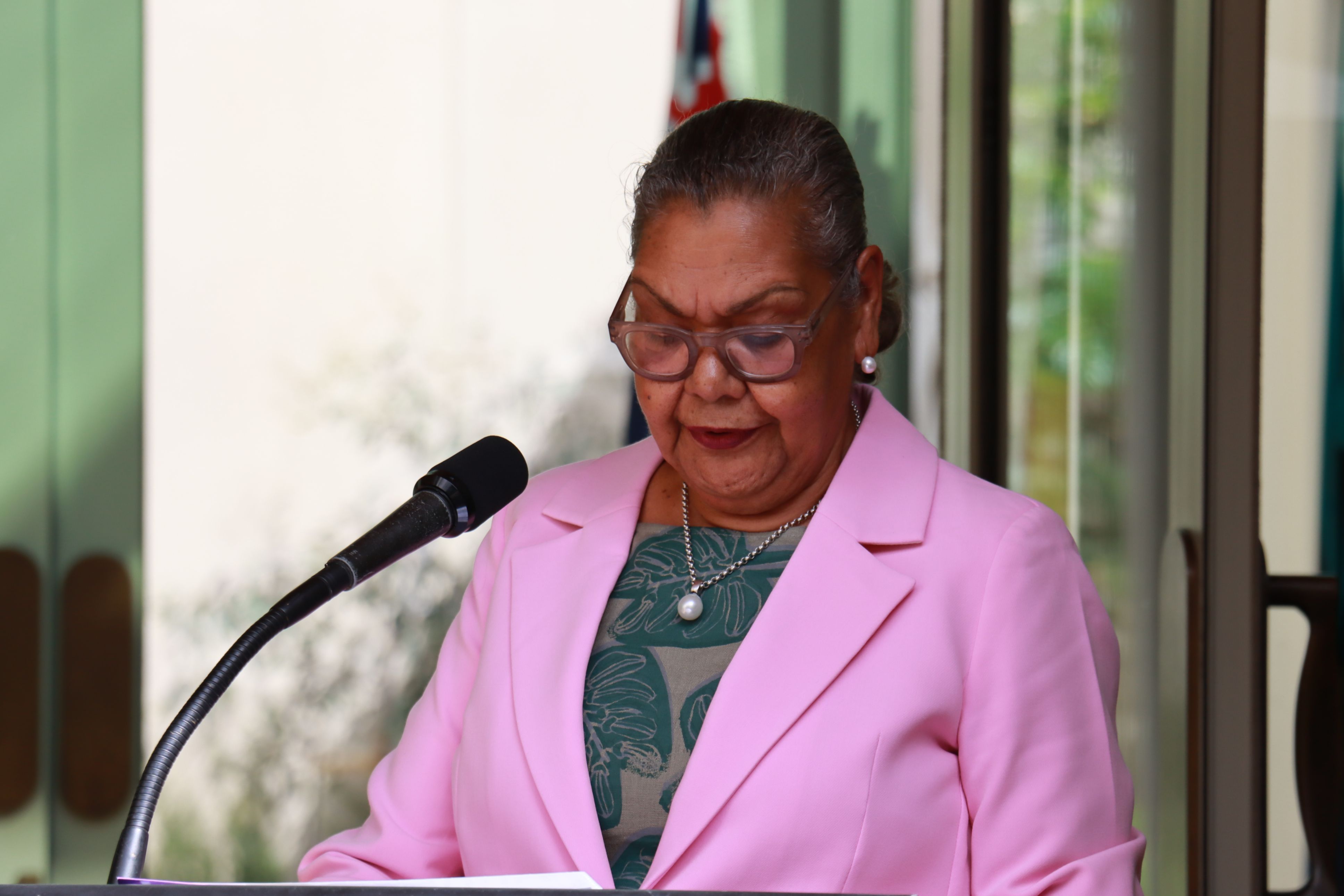
At its heart, the Strategic Plan sets out a vision for a future where the rights and lives of First Nations women, girls and gender-diverse people are upheld in full, where they live free in self-determination, shaping futures for generations to come.
The Institute’s work is grounded in an understanding that First Nations women have always been leaders, peacebuilders and system shapers, holding families, communities and Countries together through care, knowledge and resilience. What is new is not the leadership, but the intention to build the national infrastructure needed to recognise, support and sustain it.
The Strategic Plan positions this work as peacebuilding not as an abstract concept, but as the practical, daily work of healing, restoring relationships, and transforming the structures that have caused harm over generations.
This Strategy is both practical and visionary. It outlines how the Institute will work across community, national and international levels to create lasting change, acting as a bridge between lived experience and decision-making.
Central to this is the recognition that meaningful change cannot occur in isolation. The Institute brings together women on the ground, governments, researchers, funders and civic society into a shared space - a “third space” where new ways of working can emerge, grounded in respect, relationality and cultural knowledge.
Through this work, the Institute will elevate voices as evidence, ensuring that policy and systems reform are shaped by the realities and aspirations of First Nations women and communities.
.png)
The Strategic Plan focuses on three interconnected areas of work.
First, it commits to supporting and amplifying systems change by strengthening women led movements and ensuring that knowledge from the ground informs national and international decision making.
Second, it recognises that care and healing are foundational to strong societies. The Plan places this work at the centre of social and economic wellbeing, seeking to reshape how it is understood, valued and supported.
Third, it invests in new approaches to research and data, ensuring that First Nations women can gather, own and use evidence in ways that reflect cultural knowledge systems and support self-determination.
Together, these priorities form a cohesive approach to rebuilding systems so they better reflect and respond to the strengths and realities of First Nations communities.
.svg)