
We are a delegation of 150 sovereign First Nations women, girls, Sistergirls and gender-diverse people from many Nations of unceded lands, languages and ways of knowing. We are not one story. Our songlines traverse mountain and river Country, ocean and desert, islands and forests, holding the interconnected knowledges that unite us across this continent and its surrounding islands.
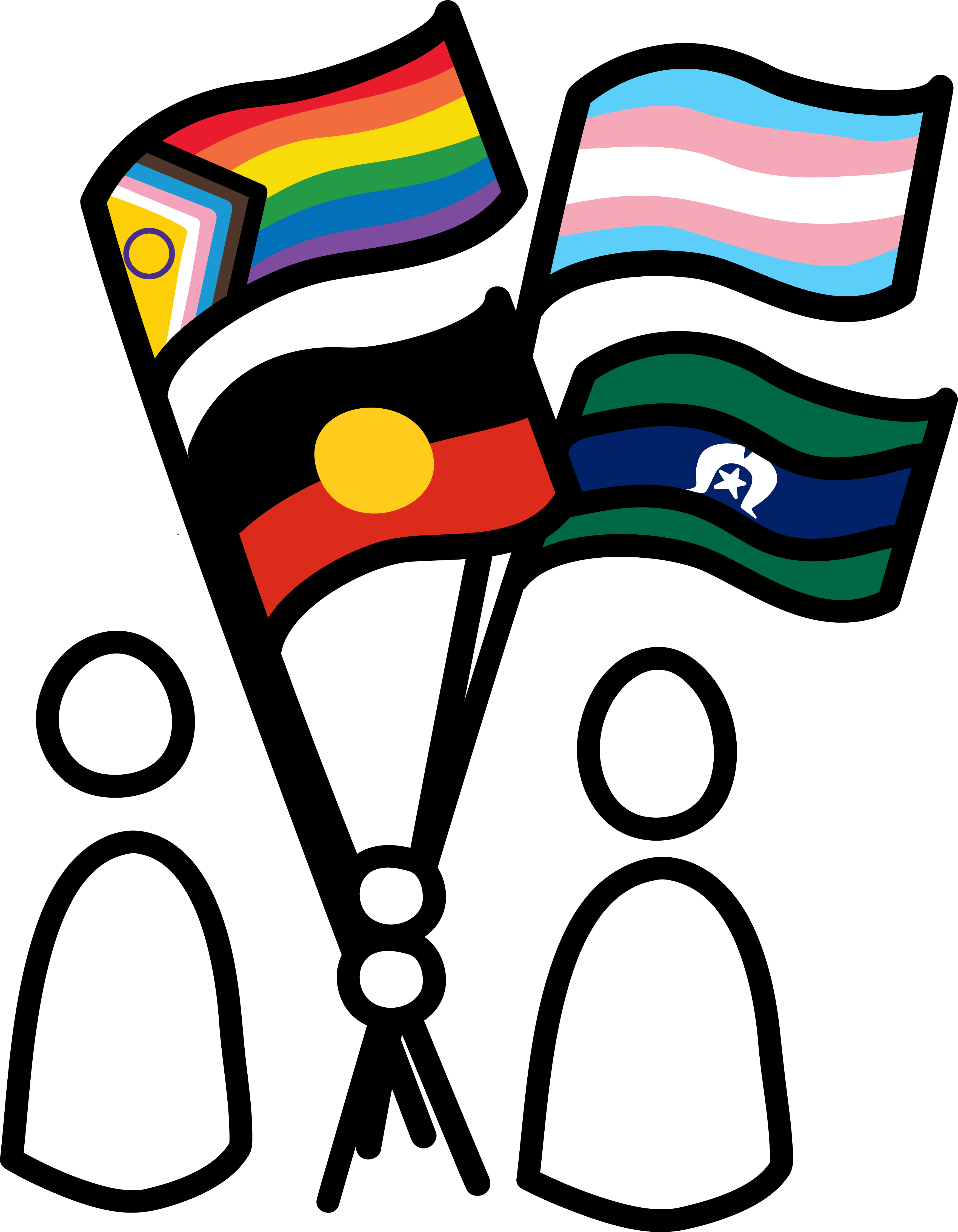
We make this Call to Action united in our vibrant intersectionality, as daughters, mothers, aunties and grandmothers, inclusive of transgender women and Sistergirls, queer mob and those with unique and additional abilities. We stand alongside Indigenous women across the world, grounded in the specificity of our Countries, cultures and responsibilities. We speak from matriarchal power. From cultural systems of language that call Country into being, connecting all human and more-than-human kin. No one is ever excluded. Our existences are in balance and in peace. This has been true since the beginning of time.
We hold the solutions. We are the carers, leaders and backbone of communities. The colonial structures of government decision-making, policies made without us, exclusion from prosperity, these are the perpetrators of harm. Entrenched sexualised racism perpetuates gendered violence, it is the reason women are murdered and missing, it steals our children, diminishes self-worth and drives suicide, it locks us out of wealth and into poverty, and criminalisesus for it. Our burden is the trauma inflicted by these structures. We live this reality. It is not abstract.
And we say: Enough. Government, decision-makers, you know our issues. So, tell us:
How can corporations and mining giants extract extreme profits, damage our lands and leave us with nothing? How can we have Closing the Gap, Treaty and ongoing calls for a national Voice, and still have policies determined by those with no knowledge of our lives? How can all the evidence show our women and children are most harmed by climate change, and still our wisdom of environmental care is ignored? Houses washed away, islands taken by the ocean, ancient trees and wildlife destroyed. The fabric of existence isbeing torn. No matter what, in the face of atrocity, we always rise.
Our delegation is doing the vital work of reweaving the social fabric and restoring the balance, care and peace that has always defined our ways of being: forming matriarchal governance collectives; creating youth hubs grounded in culture; grandmothers fighting to shut down detention that jails children as young as ten; reclaiming birthing practices on Country, immersing babies in language, song and dance; building two-way language and Country-based education; social enterprises where women heal through artistic creation; therapeutic processes connecting young people to animals and nature; and co-operative businesses reinvesting in community and Country health.
This is the work of decolonisation. The active rebuilding of our authority over our knowledge systems, our governance, our data, our bodies and our futures.
We are doing the work of change. We say, it is time to build the architecture that enables our systems and ends our cultural erasure and invisibility. Unlock finance and channel it to our movements. Bring decision-makers to the ground and meet us at our tables. We are not your recipients. We are holding society up. Recognise this. Respect us. Join us in our movement of restoration.
We are doing it for our children and for the great-great-granddaughters not yet born. In this era of fracture, we use our lineage to build peace for everyone. This era is ours, so tomorrow we thrive.
These are the structural transformations our delegationis calling for. They are grounded in what women, girls, Sistergirls and gender-diverse people have told us. These are critical in forming the architecture to sustain our change work:
It is time for accountability up, not down. Governments must be accountable to us.
Remove the red tape that redirects our energy from rebuilding into fighting.
Recognise governance grounded in culture and language. We refuse to dilute our thinking
Bureaucrats must come to Country, not for consultation but to listen, learn, and co-design.
We call for funding that comprehensively supports the fullness of our movements.
We will collect and interpret our own data, governed under Indigenous data sovereignty.
We must be resourced to assess, audit and hold systems accountable, not just be subject to evaluation ourselves.
These are the specific areas of systemic change that women continuously speak to. Investments need to be made to shift change from the ground up. These all speak to conditions for women, girls, Sistergirls and gender-diverse people to live vibrant lives, but currently, imposed structures diminish and undermine these conditions. It is time that they change. Many of the recommendations and processes to do this are in the Wiyi Yani U Thangani Change Agenda for First Nations Gender Justice (2024). We elevate them here as priorities of our delegation.
Care transforms the interventionist punitive child protection system that is dispossessing and traumatising our kids at ever higher rates, severing them from culture and love. Care grounds how we make decisions thatshape our lives, and how we educate and teach our young ones to shape a healthy, thriving systems into being. It is time to stop the predetermined story that funnels children from out of home care into prisons.
The structures surrounding our lives have created insecurity. We live in a housing crisis no one is resolving. We are trapped in overcrowded homes, in violent situations with nowhere to go, unable to gain independence, particularly in remote communities and the Torres Strait. Too often, women are forced to choose between safety and staying connected to family and culture. These issues are compounding the conditions that heighten the risk of gender-based violence.
Healthy Country and people go hand-in-hand in a reciprocal andequal relationship. This is a tenet of our knowledge systems – the oldest knowledge system on earth, where caring and ceremony on Country provides healing, restoring cultural strength, unity and connection. While this relationship has been damaged by colonisation, it remains strong in the knowledges and practices of communities, adapting and being resilient in the face of climate change.
Economic self-determination is grounded in our healing and repair, restoring the damage and severance of sustainable community brought by colonisation. As women, girls, Sistergirls and gender-diverse people, we are and always have been doing this work. We are entrepreneurs, decision-makers, brokers and deep knowledge holders – building the collectives, enterprises, cooperative structures, grounded in our governance systems and cultural economies. With economic self-determination, we hold the resources for thriving futures.
We call for our women, girls, Sistergirls and gender-diverse people to be able to think, speak and make decisions in the languages that carry our knowledge systems. Our children grow strong when they learn in our knowledge systems through community and Elders, sharing the language and knowledges that have shaped strong, healthy and sustainable societies for millennia. In this information age, we must adapt and grow systems that reflect the needs of children where they can grow confident navigating an ever-complex world.
The following sections are dedicated spaces for the specific calls and visions of our youth, and our transgender women and Sistergirls –these are voices with unique needs often hidden in other calls to action. We acknowledge the immense diversity of our women, girls, Sistergirls and gender-diverse people whose collective voices are captured across this statement.
We recognise the strength in our matriarchs and culturalways of knowing and doing. Culture is foundational to our health and wellbeing,s haping who we are and how we live. We eat, breathe and sleep culture, and weare keeping it alive in this modern age.
We are not waiting for permission. We are already leading in our communities, on Country, and in the streets. And we are asking the western structures around us to catch up.
Climate change is not an abstract threat to us. It is happening on the Country we are responsible for. We carry knowledge that has sustained ecosystems for tens of thousands of years, and we demand the right to act on it. We need to be on Country, learning from our Elders, speaking our languages and practicing our traditions, fulfilling our responsibilities of care, to the land, the water, the air, and every living thing that is connected to it. We will not accept a future where our Country is fracked, poisoned, or sacrificed. Nature has rights. So do we. When decisions are made about climate and Country, we must be part of making them, not consulted after the fact, but leading from the start.
We also need time and space to grieve. The losses that have come before us, stolen generations, stolen land, stolen futures, live in ourbodies. Healing is not a detour from the work. It is the work and we need to be supported and resourced to do so. Young people need to be held in that truth, not pushed past it.
Our children, as young as 10 years old, and ourselves must be kept out of institutions, out of jail, and kept safe and free fromout-of-home care, where they are at higher risk of being physically, sexually and mentally harmed. We need to be kept with our families. The age of criminal responsibility must be raised and the conditions that make that possible must include safe housing, youth hubs, cultural spaces, and real investment in the infrastructure of our lives.
We are the future our grandmothers built toward.
We are women, Sistergirls and queer mob who have always known who we are, we are strong in our identity, and support and hold care forour communities. We raise our nieces and nephews, we care for our Elders, andcreate spaces of nurture for kin and Country. We do this work often unnoticed. Unnoticedby mainstream systems that don’t understand us. Who don’t see our value, orrespect the ways we uphold our ancestral knowledges and practices passedthrough generations.
We pay respects to the Sistergirls, women and queer mob who grew up in generations when being our authentic selves meant being treated asless-than-human. We stand on these shoulders of mothers and aunties who havelived lives etched with violence and hate. Women who are unrelenting, who never accepted the exclusion that society has offered, and doing so, have led lives with vibrance, love and resilience. We see that this road towards acceptance hasbeen shaped, but it by no means paved.
We see our sisters being murdered and disappeared with no investigations. We watch our sisters forced into exploitation and mental health crises because there are limited services that are safe for us to go to and there is no one but each other to provide spaces of shelter and care. We must have national and rigorous investigation into this violence, and we must hold institutions responsible.
As First Nations Sistergirls, trans women and queer mob wehold a mirror to society, we show how hate speech, violence and racism can be mainstreamed as a result of cowardness, underrepresentation in the media, ignorance and unaccountability of those in power, those upholding values purportedly shaping this country – safety, equality, respect, fairness, dignity. These areour rights, they are not optional.
Yet we remain strong. We exist in the fullness of who weare, and we demand the safety to do that without threat of sexual violence, discrimination, or shame. Our communities must be resourced for dedicated spaces for trans community to gather, connect and be supported. We must have a national dialogue to shape and form a national association. We need all women and allies to stand up and have a voice with us, grounded in inclusion and authenticity. Women and gender-diverse people are strongest, Indigenous and non-Indigenous, when our voices sing in choir.
We are calling for a shift: from a society that lacks knowledge, to a reality of acceptance, safety, and being understood in our fullselves.
The Institute is ours. It exists because of us. These are the things we are asking it to do and to build. The Institute will drive the advocacy and processes to create the architecture that will make visible and enable our vital change making work.
Champion an Evergreen fund to invest in First Nations gender just scalable enterprises. Grow the fund and reinvest in socio-economic fabric.
.svg)